
Tell us about your current roles(s) and research
I am an Assistant Professor at the Department of Earth Sciences, University of Manitoba, where I lead the Basin, Environment, and straTigraphY (BETY) Lab. My research focuses on sedimentary organic matter, from kerogen locked in the rock record to carbon cycling in soils, rivers, and marine environments, present and past.
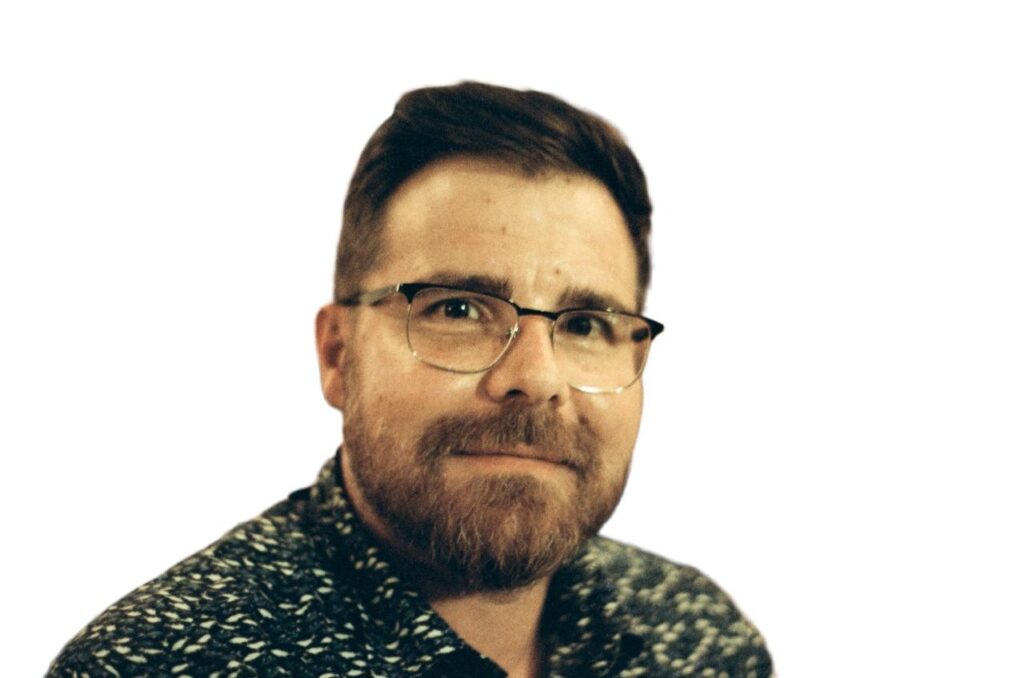
My work spans paleoclimate change, paleo-ocean biogeochemistry, the origin and cycling of carbon, petroleum systems, and enrichment of critical metals in fine-grained sediments. I collaborate extensively with the International Continental Scientific Drilling Program (ICDP), and I am one of the co-leads of the Middle Jurassic Earth System & Timescale, supported by ICDP. I also serve as the Chair of the International Continental Scientific Drilling Program-Canada and as a counsellor for the Canadian Sedimentological Research Group and the Atlantic Geoscience Society.
How did you decide to study geoscience?
I actually came into geology through a love of stories, that is, the stories rocks can tell if you know what to look for. I grew up fascinated by the landscapes and our planet’s history I read in encyclopedias, but what really hooked me was the idea that we can read rocks as a book. Once I realized, during the first years of my degree, that geology was a little bit of detective work, fieldwork, lab science, and big‑picture thinking, I never looked back.
What inspired you to take on a section editor role for Lithosphere?
Two things: community and opportunity. First, this is a time when geosciences are called on to be genuinely interdisciplinary, as Earth systems, environmental change, energy transition, critical minerals, and climate science all intersect. I had previously published in Lithosphere, one of the few reputable journals with a broad enough scope to capture that diversity while still maintaining high scientific standards. Second, I’ve benefited enormously from colleagues, editors, and reviewers who took the time to edit and review my papers and help me grow as a scientist. Serving as an editor is my way of giving back; I want to help early-career researchers navigate the publication process and shape the science that will define the next decades of geoscience research.
What sort of papers are you particularly interested in receiving as an editor?
As the Section Editor in Sedimentary Geology, Paleoclimate, Paleontology, I am especially excited about manuscripts that:
- Explore past or present-day carbon cycling in sediments, oceans, or the crust
- Use sedimentology and geochemistry to understand (paleo)environmental changes
- Address oceanic anoxic events, biogeochemical feedbacks throughout deep time, or palaeoenvironments
- Study critical metal enrichment and the connections between organic matter, redox conditions, and sedimentology
- Present high-resolution stratigraphic frameworks or innovative geochemical datasets
- Combine Earth system modelling with rock or sediment data
- Use multiple tools, e.g., XRF, pyrolysis, isotopes, microscopy, to tackle major questions in Sedimentary Geology, Paleoclimate, and Paleontology
If a paper employs creative, interdisciplinary geoscience approaches to understand how Earth functions, I am keen to see and publish it in Lithosphere.
Do you have any advice for early career researchers who might be submitting their first papers to Lithosphere?
It is always scary to press the submit button on your first manuscript. But things can be easier if you follow a few guidelines I wish I had known sooner:
- Tell a clear story. A good paper is well‑structured, with a clearly stated research question, hypothesis, objectives, a methods section that allows the reproduction of experiments, and a clear sense of why it matters.
- Don’t bury your key message. Make your contribution explicit in the abstract and introduction.
- Use figures wisely. Well-made, readable figures often make the difference between rejection and proceeding to peer review.
- Write for a broad geoscience audience. Lithosphere readers come from many subdisciplines, so make your paper accessible without oversimplifying.
- Reach out. If you’re not sure your manuscript fits, or you want guidance, editors are approachable. We’re here to help.
What is something interesting you recently learned?
I have just learned that octopuses have been observed throwing shells, silt, and algae at each other, and sometimes out of annoyance….